Showing posts with label flow measurement. Show all posts

Manifold Valves in Flow Measurement

Manifold Valves in Flow Measurement

Several approaches to measuring and controlling flow in process applications have been established over the years by the industry. Magnetic flow meters, Coriolis flowmeters, vortex meters, thermal dispersion flow meters, and a wide range of differential sensing primary elements are some examples that have successfully evolved over the years. 

Installing a differential sensing system to produce the pressure drop is one of the oldest methods of calculating flow. The orifice plate is still widely used in this process. Wedge meters, pitot meters, VENTURI meters, cone style meters, and other differential producing devices are examples. 

Many experienced industry experts would inform us that there is no one-size-fits-all solution when it comes to flow calculation. The process itself and economics and performance expectations all play a role in determining the best method to use. 

The user must be aware of the following while using the DP method to measure flow accurately.

  • The specific gravity or density of the fluid under consideration. 
  • Chemical compatibility of the media with the materials used. 
  • The estimated minimum and maximum flow rates. 
  • The media's static pressure and temperature (particularly in gas measurement applications). 
  • The inside diameter of the tubing. 
  • The primary element's parameters (in the case of the orifice plate, the bore dimension and bore location within the plate). 
  • The user must examine the pipe's flow profile to ensure that sufficient fully formed turbulent flow to obtain an accurate measurement (Reynolds number calculations come into play, and piping conditions in the process should be analyzed upstream and downstream). 
  • What amount of differential pressure does the consumer want to generate? 
  • Is the generated DP compatible with the flow device or transmitter? 
  • How much pressure drop in the flow stream is acceptable?


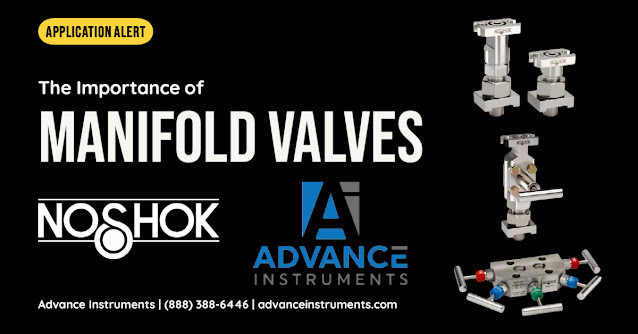
So, where do manifold valve products fit in, and why are they so crucial? For the most part, the valves are service valves between the primary meter and the measuring instrument (DP transmitter or flow computer). The valves allow the user to block in, calibrate or check calibration, replace instruments, and vent entrapped pressure without shutting down the critical operation.

Manifold Valves are available in several configurations, soft seat, hard seat, 2-valve types, 3-valve types, or 5-valve types. They are available in various materials, but stainless steel and carbon steel are the most common. These valves come with a standard bore or large bore design for custody transfer applications. Manifold valves offer high and low-pressure isolation (pressure upstream and downstream of the differential producing element) and the ability to equalize the differential pressure to the transmitter or flow computer.  Finally, manifold valves can offer a dedicated vent valve to vent entrapped pressure during service operations.

In conclusion, manifold valves play a critical role in allowing the user to operate and service instrumentation in their processes safely. Every application and every supplier's goal is to work collaboratively to achieve safety, protect valuable assets, reduce downtime during maintenance, lower maintenance cost, and higher measurement accuracy.

For more information, contact Advance Instruments. Call them at (888) 388-6446 or visit https://advanceinstruments.com.


Weir Boxes

Weir Boxes

Water management systems depend on different factors, but an accurate measurement is a priority. Depending on the type of water management system you run, there are many flow measurement tools at your disposal. 

However, the cheapest and most effective is the open channel system and weir boxes are the durable and precise measuring tools that allow your operation to gauge the channel flow in the easiest way possible.

First, what is a Weir Box and how does it work? Weirs direct open channel flow for measurement purposes. A Weir Box usually contains a Weir plate with a 'V' notch that allows you to take accurate flow sample measurements. Installing a Weir Box in your open channel flow system allows you to achieve the desired results with ease. The most significant advantages of weir boxes are: 

  1. Their design is simple and easy to use, allowing for precise measurements. 
  2. They are adept at low flow operations. 

Indicators of a need for a Weir Box depend on the setup and conditions of your operation. Weirs may not be the best choice for closed channel flows or those with high water volumes. Open channel low flow systems, however, require Weirs for consistent and accurate measurement. Another consideration is durability. 

Weir flow measurement devices are rugged and inexpensive, making them the right choice for harsh environment operations. All that matters when selecting a Weir Box is whether you want a reliable, accurate measuring tool. If so, Weir Boxes are right for you. 

Weir Boxes come in many materials. Fiberglass is a good material for weir boxes because it is strong and durable, and resistant to the elements. Choosing a fiberglass weir box means getting a tool that will serve your operation reliably. 

A flow meter or a Weir Box are the best ways to measure open channels. Weir Boxes offer the measurements needed to control the water system efficiently. 

To install a Weir Box on your water management system, you need to find a  company that fits that bill perfectly. TRACOM offers every kind of water management products you need. Contact Advance Instruments to get more information about TRACOM products.

Advance Instruments
(888) 388-6446
www.advanceinstruments.com

The Teledyne ISCO LaserFlow® Non-contact Velocity Sensor

The Teledyne ISCO LaserFlow velocity sensor remotely measures flow in open channels with non-contact Laser Doppler Velocity technology and non-contact Ultrasonic Level technology. The sensor uses advanced technology to measure velocity with a laser beam at single or multiple points below the surface of the wastewater stream.

The sensor uses an ultrasonic level sensor to measure the level and determines a sub-surface point to measure velocity. The sensor then focuses its laser beam at this point and measures the frequency shift of the returned light.

During submerged conditions, flow measurement continues without interruption with optional continuous wave Doppler Ultrasonic Area Velocity technology.

With its specially designed mounting bracket in place, the LaserFlow can be deployed and removed from street level. This avoids the risk and expense of confined space entry. A variety of communication options enable programming and data retrieval from a remote location. Information about data quality can be recorded and transmitted with the flow data.

For more information about Teledyne ISCO products in Western Pennsylvania, Western Maryland, West Virginia, and Northeastern Ohio, contact Advance Instruments. Call them at  (888) 388-6446, or visit their website https://advanceinstruments.com.

Open Channel Flow Challenges - Measuring Flow in Flumes, Weirs, Rivers, and Streams


This video helps you find the best solution to your open channel flow issues. Whether your flow challenge be a flume, weir, river or stream, this presentation by Business Development Manager at Teledyne ISCO, Darrell Kuta, provides expert tips on how to overcome them.

Teledyne ISCO manufactures a wide range of products for professionals working in water pollution monitoring and abatement, engineers and managers involved with wastewater process control. They maintain an outstanding library of educational videos videos here: https://www.youtube.com/channel/UCtcYqTAaloE2TBoEkWeIMTA.

For more information in Ohio, Western Pennsylvania, Western MD, and West Virginia contact Advance Instruments by calling (888) 388-6446 or visit their website at https://advanceinstruments.com.

Fuji Electric’s Spool Piece Ultrasonic Flowmeter (FST)


Flow rate inside a pipe is not uniform. A way to correct for this phenomena so that measurement can be accurately obtained is with the use of multiple internal flow sensors. 

By using three sets of sensors, at three parallel paths to each other, the Fuji Electric FST flowmeter can sense both the flow rate at the center of the pipe and the flow rate near the pipe wall. Advanced electronics in the flowmeter housing then averages the flow rates based on Fuji's algorithm to achieve the accuracy of ±0.2% of rate. The Fuji FST delivers accurate measurement regardless of the point of measurement, without being affected by the change in the flow velocity profile.

APPLICATIONS
============
Reduction of water used in plant utilities - Visual depiction of a facility’s water use results in more effective management of water consumption.

Flow monitoring in filtration equipment - Real-time visualization of the filtration capacity allows for the optimization of flow rates, while reductions in pressure loss result in energy savings.

Motor load reduction - Reductions in power consumption are achieved by using an inverter only, instead of a combination of motorized valve and controller to control flow rate.

Flow measurement on two pipes - Optimal ratio of flow control for both pipes.

Liquid level control in tanks - Monitoring the flow rate at inlet and at outlet enables you to manage the liquid level in a tank.

For more information, contact Advance Instruments:
(888) 388-6446

Non-Contact Area Velocity Flow Measurement Using Advanced Laser Doppler Technology

Teledyne ISCO LaserFlow
The Teledyne ISCO LaserFlow remotely measures flow in open channels with non-contact Laser Doppler Velocity technology and non-contact Ultrasonic Level technology. The sensor uses advanced technology to measure velocity with a laser beam at single or multiple points below the surface of the wastewater stream.

An ultrasonic level sensor is used to measure the level and then determines a sub-surface point to measure velocity. The sensor then focuses its laser beam at this point and measures the frequency shift of the returned light.

This sensor is ideal for a broad range of wastewater monitoring applications and is compatible with readily available flow meters.

With optional continuous wave Doppler Ultrasonic Area Velocity technology flow measurement continues without interruption even while submerged.

Teledyne ISCO LaserFlowWith a specially designed mounting bracket the sensor can be deployed and removed from street level,  avoiding the risk and expense of confined space entry. A variety of communication options enable programming and data retrieval from a remote location as well. Built-in diagnostic tools simplify installation, maintenance, and advanced communication options reduce site visits.

The sensor provides excellent system versatility across a wide variety of industrial applications to manhole installations, with many configuration options providing the flexibility to measure flow in most open channel applications.

Depending on your application needs, the device can be programmed to take velocity measurements at single or multiple points below the water's surface, producing an accurate mean velocity reading.

Teledyne ISCO LaserFlowIn applications where the level measurement point of the built-in ultrasonic and the measurement point of the laser velocity are of different elevations, such as a free-falling outfall or drop manhole, the remote ultrasonic option can be used so that both measurement points reference the same elevation.

During submerged conditions, the optional bottom-mounted area velocity sensor seamlessly takes over the flow rate measurement. The sensor provides ultrasonic Doppler velocity measurement and Differential Pressure level measurement. This option measures flow in the pipe/channel. By measuring velocity over a large area, the ultrasonic Doppler technology provides more accurate flow measurement during submerged conditions.

For redundant flow measurement at critical monitoring sites, a unique flexibility is added by an optional sensor which is mounted at the bottom of the pipe. This sensor provides redundant velocity, level, and flow data from the same site as the device.

Teledyne ISCO LaserFlowFollowing initial installation and adjustment, the sensor can be installed or removed as needed without manhole entry in most situations, using the optional sensor retrieval arm to grasp the handle.

The handle's simple yet effective locking mechanism holds the sensor securely in place, and is easy to engage and release from above ground.

For more information, contact Advance Instruments at https://advanceinstruments.com or call  (888) 388-6446.

Flumes For Water System Open Channel Flow Measurement

A "cutthroat flume" used to facilitate open
channel flow measurement.
(TRACOM)
The measurement of flowing water in an open channel can be facilitated by applying known methodologies and a specifically shaped restriction in the flow path. The restriction is called a flume.

A flume, as applied to open channel flow, is a fixed structure in the flow path that directs or restricts the flowing water in a manner that allows a measurement of the fluid depth at a defined point to be translated into a volumetric flow rate. There are several different types of flumes, each with a characteristic measuring procedure used to determine flow volume. Applications for flumes and their open channel flow measurement techniques are commonly found in agriculture, sewer systems, water treatment, and industrial effluent measurement stations.

Flumes can provide measurement accuracy suitable for many uses. Advantages are their simplicity, ease of maintenance, comparatively small footprint, and ability to measure large flows. Fiberglass flumes provide solid long term performance due to their corrosion resistance and smooth, easy to maintain, surface. Prefabricated units can be shipped to an installation site and easy installed.

Share your open channel flow measurement challenges with application specialists, leveraging your own knowledge and experience with their product application expertise.