Several approaches to measuring and controlling flow in process applications have been established over the years by the industry. Magnetic flow meters, Coriolis flowmeters, vortex meters, thermal dispersion flow meters, and a wide range of differential sensing primary elements are some examples that have successfully evolved over the years.
Installing a differential sensing system to produce the pressure drop is one of the oldest methods of calculating flow. The orifice plate is still widely used in this process. Wedge meters, pitot meters, VENTURI meters, cone style meters, and other differential producing devices are examples.
Many experienced industry experts would inform us that there is no one-size-fits-all solution when it comes to flow calculation. The process itself and economics and performance expectations all play a role in determining the best method to use.
The user must be aware of the following while using the DP method to measure flow accurately.
- The specific gravity or density of the fluid under consideration.
- Chemical compatibility of the media with the materials used.
- The estimated minimum and maximum flow rates.
- The media's static pressure and temperature (particularly in gas measurement applications).
- The inside diameter of the tubing.
- The primary element's parameters (in the case of the orifice plate, the bore dimension and bore location within the plate).
- The user must examine the pipe's flow profile to ensure that sufficient fully formed turbulent flow to obtain an accurate measurement (Reynolds number calculations come into play, and piping conditions in the process should be analyzed upstream and downstream).
- What amount of differential pressure does the consumer want to generate?
- Is the generated DP compatible with the flow device or transmitter?
- How much pressure drop in the flow stream is acceptable?

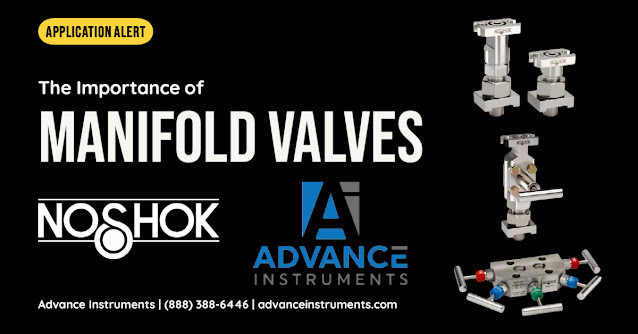
So, where do manifold valve products fit in, and why are they so crucial? For the most part, the valves are service valves between the primary meter and the measuring instrument (DP transmitter or flow computer). The valves allow the user to block in, calibrate or check calibration, replace instruments, and vent entrapped pressure without shutting down the critical operation.
Manifold Valves are available in several configurations, soft seat, hard seat, 2-valve types, 3-valve types, or 5-valve types. They are available in various materials, but stainless steel and carbon steel are the most common. These valves come with a standard bore or large bore design for custody transfer applications. Manifold valves offer high and low-pressure isolation (pressure upstream and downstream of the differential producing element) and the ability to equalize the differential pressure to the transmitter or flow computer. Finally, manifold valves can offer a dedicated vent valve to vent entrapped pressure during service operations.
In conclusion, manifold valves play a critical role in allowing the user to operate and service instrumentation in their processes safely. Every application and every supplier's goal is to work collaboratively to achieve safety, protect valuable assets, reduce downtime during maintenance, lower maintenance cost, and higher measurement accuracy.
For more information, contact Advance Instruments. Call them at (888) 388-6446 or visit https://advanceinstruments.com.

